Category Archives: memoir

The Balloon

Image credit here.

Image credit here.

What do I do now?

April 6, 2012

A few weeks ago I got the idea to write an essay about myself as a balloon. I put it off, and I find I am no longer able to do so.

I had been tied firmly to my moorings and, despite dancing in breezes and being bullied by gales, I was confident that I’d hold fast. Popping was out of the question. My sense of security had made me a regular punch ball.

Thus grounded, I had even forgotten I was a balloon. I had continued in this state for decades without a second thought. I was so accustomed to my attachment that I no longer contemplated it. My connection to Hanna had become like breathing, I suppose. It was necessary for life, and yet it went on largely outside my conscious awareness–until a disruption of my normal rhythm reminded me I was doing it at all.

After an unsettling fall in which Hanna did not return my communications, I became keenly aware of my tie to her, my umbilical cord. Undernourished, my robust skin began to dull and thin. I began to feel deflated, and I wondered how much longer the silence would continue.

Hanna’s January letter cut me loose.

I bounced and skidded across the ground as the moaning wind compelled me across the gray winter landscape to an uncertain fate. Fragile, I was in danger of puncture. Sharp pebbles and brittle grasses clawed at my sides. For nearly two months, it was all I could do to keep myself intact.

Sometime in March, the winds started to abate. Spring seemed possible. The sun reemerged and began to warm me with its golden rays. I felt myself growing stronger. The beams whispered love to me. I ate and drank them. I began to grow fat and round once more, my skin taut and strong and shiny. Yes, Spring was on the move.

Warmth curled itself around me and within me, and I began to rise in fits and starts. Unattached, I couldn’t stop myself. And as I got over my fear, I began to enjoy my new perspective. I was no longer safely tethered, it was true. But my uncertainty was eclipsed by a burgeoning joy at this unexpected freedom.

I wanted to say all that–but I can’t. (Here you have to imagine the sudden ripping of a phonograph needle across a vinyl record.) I can’t write all that because just as the balloon was beginning its steady rise, a second letter came.

Hanna stated it had not been her intention to end the friendship but merely to put it on hold.

At that exact moment, the balloon snagged in the branches of a tree. It is stuck there still. The balloon is unable to continue its ascent until a further shift of the wind releases it. Meanwhile, the string dangles within reach, leaving open the possibility of its recapture.

What comes next is up in the air. So you see, I am unable to write about myself as a balloon.

This excerpt is part of The Story of Hanna. For the prior installment, click here. For the next installment, click here.

Chocolate

Image credit here.

Image credit here.

2013

Writing seems to be at least as good as drugs. I went to sleep after finishing my essay on becoming invisible and had the oddest dream:

The weather was chilly. I stood just outside (Irish Name) Hall, an academic building on the (Jesuit) University campus. A man smiled and hurried by on my left as he made for the door. I didn’t take too close a look. Why would I? I was accustomed to the rhythms of student life, and I no longer noticed their comforting background hum.

I can’t recall his face other than to say that he was youthful looking and without facial hair. I assumed he was a fellow student. He had brown skin, and his dark hair hung about to his shoulders. My peripheral vision told me that he wore jeans and a dark leather jacket. Something flashed bright red—a knit cap or a winter scarf?  In passing, he held out his left hand as if in greeting. Without thinking–and perhaps in recognition of some unspoken solidarity among those who labor for knowledge–I held out my left hand in return. We briefly clasped hands.

I felt an immediate, sharp pain.

Stunned, I opened my fingers to find that his touch had transferred a loosely-crumpled wad of wood shavings. I soon discovered the source of my discomfort. In the ball were hidden four nails: two small wire brads and two larger wood nails. His grip had driven the larger nails into the bottom of my palm and the smaller ones into my wrist directly below. I spun around, confused. But he was already gone.

I brushed away the nails. Their tips had become embedded just deeply enough to draw a trickle of blood. I felt piqued and violated. He had smiled even while planning to harm me, and I had held out my hand in welcome. But what was to be done? Finding no recourse, I went about my business.

I opened the door and entered the building. There I found myself standing in some sort of dimly lit café or general store. To my right stood Rodger, a former professor turned colleague. Rodger’s class and way of being had been a great help to me as I was coming to the end of a long and exhausting spiritual slog. He continues to be a wise and helpful presence though we rarely interact.

Rodger stood at the end of a long wooden table which reached nearly to his chest. In the low light, I could make out a wall of shelves behind him. He was preparing to take orders, to serve people. He looked worn out.

Still startled from my encounter a moment before, I unclenched my fist to share with him the story of what had happened. The dripping blood had formed a jelly-like blob of crimson where it had congealed in the center of my palm. I wiped it away and showed Rodger my hand. He told me he was sorry about what had happened to me. I shrugged it off.

I asked how he was doing, and Rodger confirmed that he was weary. I thought some refreshment might help, and I asked him why he didn’t fix himself some tea. I remembered he was not a coffee drinker. Rodger replied that the tea had run out.

I wanted to find some way to help but couldn’t, at first, think how. I thought about my habit of carrying a bit of dark chocolate in my purse for just such emergencies as these. Rodger said he would be glad to have it.

I felt pleased to know I had something to offer and pleased that Rodger would accept it. I hoped it wouldn’t be covered in lint.

As I began to dig around in my purse, the room filled with people. They lined up along the sides of the table facing Rodger and waited to place orders for hot drinks and make requests for foods and dry goods. As the crowd grew, I was pushed farther and farther down the table and away from Rodger. For some reason, I remember that the woman who stood directly in front of me, near the back of what had become a throng, was wearing a beige overcoat.

Once I extricated myself from the tangle, I returned my attention to the excavation of my purse. To my surprise, I found two large, unopened bars of chocolate! Their labels promised a delicious treat.

I tried to recall buying these bars but I was unable to account for their presence in my bag. I realized they must have been in the bottom of my purse for some time because I could feel that they had they had begun to break along their fault lines into smaller squares. Finally, I came upon the single dark square I had originally sought. I was delighted! Not only could I serve Rodger; I could even offer him choices. I had more than enough to share.

My alarm went off. I got out of bed and pushed the dream to the back of my mind. Later as I sat in church, I woke up with a jolt: Nails. Palm. OH.

I recounted last night’s dream to my husband as we took a long walk together. He immediately saw what I had completely missed. And now, as I sit here finishing this account, I begin to wonder about something else. I had assumed the man had intended malice.

What if this was not the case?

Because of the timing and context in which I dreamed and recorded this dream, I knew it belonged to The Story of Hanna but have decided it also belongs in Reflections. For the prior installment, click here. For the next installment, click here.

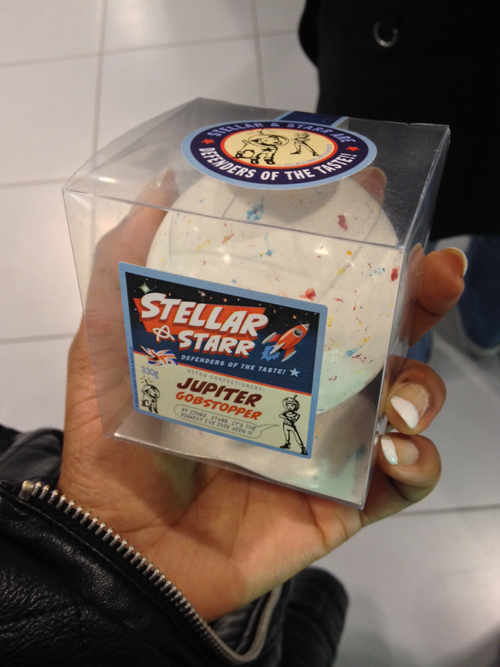
Everlasting Gobstopper

Image courtesy of weheartit.com

Image courtesy of weheartit.com

Below, I have typed out a typical after-dinner conversation during what I am going to designate the I Didn’t Inhale Stage of early childhood development. I pause here for a nod to Bill Clinton, who attempted to set voters’ minds at ease during his first run for the presidency by explaining that while he had smoked marijuana, he hadn’t actually inhaled.

Did your kids go through this stage too? Though mine never went on to argue the situational definition of the word is (Sorry, Bill. Couldn’t resist!), I admit to being quite impressed at their dexterity. I thought you had to have an advanced degree to perpetrate these types of mental gymnastics.

One of my daughters was particularly adept. I have no doubts about her character development but let’s just say that if she ever decides to go into business, you’d all better hold on to your wallets.

Daughter: May I have some dessert?

Me: Sure. (giving her the dessert)

Daughter: (contented silence follows, after which daughter looks up with messy face) May I have more dessert?

Me: No. I think you’ve had enough for now.

Daughter: But I didn’t like it.

Me: Oh. I’m sorry you didn’t like it.

Daughter: (decisive) No, I didn’t like it. So I want some more.

Me: No, honey.

Daughter: (becoming agitated) But I didn’t like it! I didn’t like it!

Many other variants on this conversation took place. Imagine my dragging a tantrumming child out of Chuck-E-Cheese after an adrenaline-filled morning of gambling. Uh–playing, playing! I meant to say playing. For crying out loud! What is wrong with you people?

Me: Time go home for lunch and a rest.

Daughter: But I didn’t have fun! I didn’t have fun!

I have mixed feelings as I recall those days. I see our children’s tears of disillusionment and hear their protests. Their distress was very real and surprisingly pure. My daughters cried out to me to right what they perceived as injustice as surely as they would have sought me if a bully had yanked the lollipops from their mouths or the Pokémon cards from their sweaty little hands.

How could the dessert be gone if they were not sated? How could play time be over if they had not grown tired of playing? I was supposed to be their savior. But my NO could easily have cast me as persecutor. I was such a meanie.

It’s funny to think about now. But probably only because this was a battle they never had a chance of winning. Thank goodness. Envision the sort of adults they might have become had their coups succeeded! I can imagine any number of “rules” they might have extrapolated from their experience. Here are a few which come immediately to mind:

  1. Your job is to make me happy.
  2. It’s not over until I say it’s over.
  3. I get to have my cake and eat it too.
  4. Life is supposed to be fair—and I get to define fair.
  5. I am a victim.
  6. You owe me.
  7. It’s all about me.
  8. I shouldn’t feel pain.
  9. Rules are for other people.
  10. You are responsible for my feelings.

I hadn’t thought about this brief period for years. I might have forgotten this stage altogether if not for the surprising Summer of 2011.

Niko: I know we agreed that Hanna and I would only stay for four weeks…but not having the use of your computer made it impossible for us to do the activities and see the sights we had wanted to. I am certain that if we just stay a few more weeks, we can accomplish the things we want to do and still make this vacation a success.

SO.

We’ve decided to extend our visit by a few weeks.

Is that ok?

Me: I understand your frustration but that won’t work for us. Whether or not you extend is your choice but you will still have to leave our house on the agreed-upon date. I’m sorry, the answer is no.

Niko: But I didn’t have fun.

This post is part of The Story of Hanna, a true tale of love, friendship, betrayal, loss, and aging. Hanna was my best friend for over 30 years. Until the Terrible Summer of 2011 when things went terribly awry. For the prior installment click here. For the next installment, click here.

A Sorry Translation

Image credit here.

Image credit here.

One legacy my father left to me was the Book of Family Rules. Since his death in 1990, the important role of Keeper has fallen squarely upon my shoulders.

This isn’t a book which can be read and followed as, say, a cook book or the instructions for assembling a bicycle. To the uninitiated, the Book would seem a hodgepodge of family stories and remembrances, assembled for mild-mannered entertainment on a rainy day and without thought to cohesiveness or purpose. On the contrary! This sacred Book has instructed my family in proper living for generations. So potent are its formulas that they must be hidden in plain sight.

A few of the rules are pretty straightforward and discernible, even to the untrained eye—A Lie is a Spank and Food is Love, for example. For the most part, however, a proper exegesis requires the Decoder Ring, which, I am sorry to report, was not among my father’s personal effects or in his safety deposit box. As a result, I am required to spend untold hours hunched over the brittle pages of this text, extracting what I can.

I wouldn’t be surprised if my younger sister, Gwen, has hidden or destroyed the ring. She won’t say. Gwen never has cooperated. She never did like the Rules, and she refused to follow them no matter how many times my father spanked or pinched her. But then again, she is one of those annoying people who speaks of therapy as a positive thing  and uses words like “dysfunctional,” “enmeshment,” and “abuse.”

All that is by way of background.

What I want to share with you today is my most recent discovery. I found another Rule, and it wasn’t even buried! I had suspected I’d find this one if I just kept reading, and I did. Days like this are so exciting that they give me the strength I need to keep coaxing the Book to give up its secrets. I must not lose courage! How will my future generations live if the code is lost?

When we were small, my father took the time to translate certain Rules from the Book. He had hired a German tutor to prepared me and Gwen for our move overseas, so we were familiar with the concept.

Danke = Thank You

Junge = Boy

I’m sorry = I’ll never do it again

“I’m sorry” is actually a promise. And promises cannot be broken.

I took this Rule very seriously. I did. I tried to be a good girl. But this law was absolute, and I was a repeat offender. I became skilled at hiding my guilt from others—and myself.

Don’t. Tell. Gwen. I’m having an inkling of doubt about this Rule. I haven’t yet made up my mind. I’m not in any hurry to add the title Heretic or Dumbbell to Recidivist on my resume.

But here’s the thing….My father rarely apologized for anything. He seemed to prefer his own rule: Do as I say, not as I do.

This post belongs in the thread Family Rules. You can find the prior installment here. Earlier essays can be found under the Family Rules tab.

Hunger

Image credit here.

Image credit here.

Some nights my eyes flutter open just as I am drifting off. Panic rises in my chest. I curl into my hollow, scooped-out belly. Tears quiver and shudder, silent in the darkness, born of feelings which slumber when I am awake.

I need my mother.

I need to touch her and smell her. I need to drink her in for the day she no longer walks the earth.

I don’t understand the urgent messages which bypass my logic and shake my body. Maybe they are not meant to be understood, for to analyze them is to diminish their pull and mystery.

My flesh issues from hers. Our viscera are forever bound, transmitting dispatches almost too subtle to apprehend. Only in the gloaming of sleep can they find their mark.

I am a defenseless child, sniffling in the night: Mommy!

She is blinking back sleep when I arrive around 9 p.m. on Saturday for a two-day stay. I love her for primping, yet it distresses me to see her curling-ironed hair and powdered face. I want Mom au Natural, the mother of my youth, who appears once this old girl stops caring about appearances. I love her naked face and her straight, fly-away hair. I love her mom musk. It’s just a little bit stinky.

We hug, and we can’t let go. Who is clinging to whom? I feel her still-strong back under the thin padding of age, and I am reassured despite her stoop and slowing gait. I breathe into her neck, and I nuzzle her whiskers, which both scratch and soothe. I kiss her cheek, and I kiss her cheek again. I hug her, and I kiss her cheek once more. I cannot release her. Stay with me forever, Mommy!

My mother looks weary and fragile in the bright lights as she moves about the kitchen with intentional steps. Her efforts are redolent of Estee Lauder and longing. And meatloaf, of course. She has my dinner warmed and ready, just in case. Just in case her girl is hungry. Tit for tat. We are both starved.

I eat. Every bite is delicious. I am afraid of taking too many nibbles, of eating her all up. She must be protected, conserved.

I command: Tell me when you want breakfast, and I will make it. Whatever you want. I want to serve you for a change.

She wants to please me. She tolerates my efforts the same way she managed those 8 a.m. Mother’s Day breakfasts in bed. Soon she is up from the table and bustling. She can’t help herself. Her love is palpable. But more than love is involved in these appetites. My mother must feed me so that I can feed her.

She consumes me hesitantly at first, without appearing to do so. Her hunger is gentle and timid, and I can bear it.

Mom was gifted but under-educated, insightful but unaffirmed. She has become opinionated but difficult to confront. She lacks the confidence to mount overt challenges, preferring sidelong jabs instead. She remains independent but lonely. My mother is so proud of me, so pleased to see me, that she has to check herself. Over the next two days, we walk and talk. We eat and talk. She talks and talks and talks, my listening presence both validation and repast.

I listen raptly and study her intently, filling my larder with rations I hope will not have to last for the rest of my life.

I see her crazy eyebrow hairs, her still-beautiful face. I pore over her fingers, which are bent into unnatural shapes by the slow progress of arthritis. I know her secret and take her right hand, needing to touch her palm. The graft from her stomach is brown and baby soft where she reached up and grabbed her mother’s scalding coffee. It comforts me.

I spread my spiritual arms to luxuriate in presence and in memory. Cookies baked, stories told, brows smoothed, books read. Gwen and Mom and I squeezed into a wing chair, one girl nestled on either side, as she reads The Wind in the Willows. I see us at the dining table with our friends as she supervises the annual gingerbread house and cookie decorating event. I can think of no other mother who allowed such prodigious, glorious, mess making! I recall her guided adventures through the wilderness of the forbidden creek. I feel pride in the fact that she was always chosen second—after Mr. Plotnick–for neighborhood baseball. You should haves seen her at bat! I hear her outrageous howl as she watches British television. My father never failed to become apoplectic over her “raucous laughter,” and that was part of the fun. Our walks around the sprawling suburban block with our terrier, Bonnie, were not chores, but events.

I have the best Mom ever! In my softened state, I am a honey-filled sponge.

I stockpile as fast as I can. I jump at every crumb.

My mother is filling as well, although she lags behind me. I wonder if age is responsible. She has regained some of her energy and form and is in touch with her hunger. In fact, she is becoming plucky.

By Monday morning I note signs of my impending saturation.

My mother doesn’t listen. Not really. She loves me beyond measure. This I know. But she has difficulty listening. Viewpoints and choices outside her range of comfort do not register–or they do not register as valid, which is almost the same thing and likely worse.

Mom asks me about myself. I open my mouth, and my responses become convenient segues into her stories. Another time, I feel tender enough to risk the slow wade into grief over the sudden death of our beloved Demont, a friend and brother since college despite infrequent contact in recent years.

My mother makes the attempt to hear me. She does. She tunes in closely when I speak of his daughter. I lament: How will she pay for college now? Aha. The fact that Shereen was born out of wedlock signals to my mother that her suspicions about Demont, whom she had warmly welcomed into her home on several occasions, have been warranted all along.

Oh, look! Mom notices something interesting as we drive the rolling hills. Demont is forgotten. Mom points out the window and begins to narrate passing scenes. She repeats stories I already know. I don’t think she knows how I feel or what has taken place. And I don’t tell her.

In the past, I have gently confronted my mother about her religious and political tirades. I have told her how anxious and trapped I feel when she goes on and on, assuming I am on the same bandwagon or that I need to be instructed about The Ways of the World. My mother is often able to curb her diatribes, at least in the short term, though leakage inevitably occurs.

Last year, she asked me point blank: Do you think I am racially prejudiced? I gave a point-blank answer: Yes. A long walk-and-talk was required. She was Very Hurt and Misunderstood. I used all my counseling skills and let her pick my bones clean. I velveted my paws out of love but I did not recant. What I did do, and this is not necessarily admirable, was spin her around with words which left her unsure of my meaning so that she, none the wiser, took from our talk the apology she needed in order to reassure herself that she is a Good Person.

Arguing back doesn’t hold much promise for change. I am not one to bang my head against the wall repeatedly just to see if the wall is still hard. My mother is doing the best she knows how, and she does work at expanding her views. She has come much farther than her parents and brother. I’ll give her credit for her efforts. And some sighs as well: Has she not noticed that our children have begun to stay away?

By the time I pack my bag, I am close to fed up. Mom’s logic is emotional, squishy. She is sentimental. With dewy eyes, she must touch, squeeze, hug, pat, and rub to better draw out my juices. I have reverted to childhood defenses: I am hard and smooth and logical. I cannot not tolerate this slop.

I feel guilty accepting the half-peck of peaches, the tub of gummi worms, the two bars of Belgian chocolate, the three bags of dog treats, the four jars of jam, and the partridge in the pear tree. I know I am starting to have unkind thoughts. Damn her, anyway. I do not want to see her I’m-trying-to-be-brave smile and martyred gaze as I step into my car. I do not want to know that I am leaving her unsatisfied, the visit an hors d’oeuvre, a down payment. Love has become an intellectual phenomenon, and I need to get the hell out of here.

It’s been just over a week since my return. My stomach is starting to rumble.

Petunia

Image credit here.

Image credit here.

I wrote this in Fall, 2013, while slogging through my therapeutic writing about the infamous Summer of 2012 and its aftermath.

My brain is fully of heavy thoughts, and it is time to take a break.

I thought it would only be fair to devote a page to Petunia, a crucial but heretofore overlooked player in that summer’s drama. Who the heck is Petunia, you ask? Why my old pink laptop, of course!

I am writing on her at this very moment!

Incredibly, she is still alive. She still boots but her disk drive is broken. Her backup service has inexplicably failed. Several of her programs have mutinied and refuse to run. I have repaired her frayed cord twice—once with blue painter’s tape and now with purple duct tape. (She says the latter is much cooler.) She peppers me with countless error messages each day but I can see that she is trying to hang on for my sake, and I appreciate her for it.

Though Petunia should be past menopause by now, she still overheats and shuts herself down about every 30 minutes. But take heart! I am close to perfecting the solution. As I write this, she is propped up on my daughter’s pink and green polka-dotted eraser (It should come as no surprise that she is please with my choice.) and a packet of wooden chopsticks I found in the utensil drawer. She is being ventilated by a fan sitting on my big yellow Langenscheidt dictionary, which is in turn sitting on the white plastic Ikea chair across the kitchen table from me. It is October, and I’m getting a wee bit chilly….

I could use a cup of coffee but then I’d have to unplug something.

I am not making this up.

This is part of The Story of Hanna. For the previous installment, click here. For the next installment, click here.

Maybonne and Earl

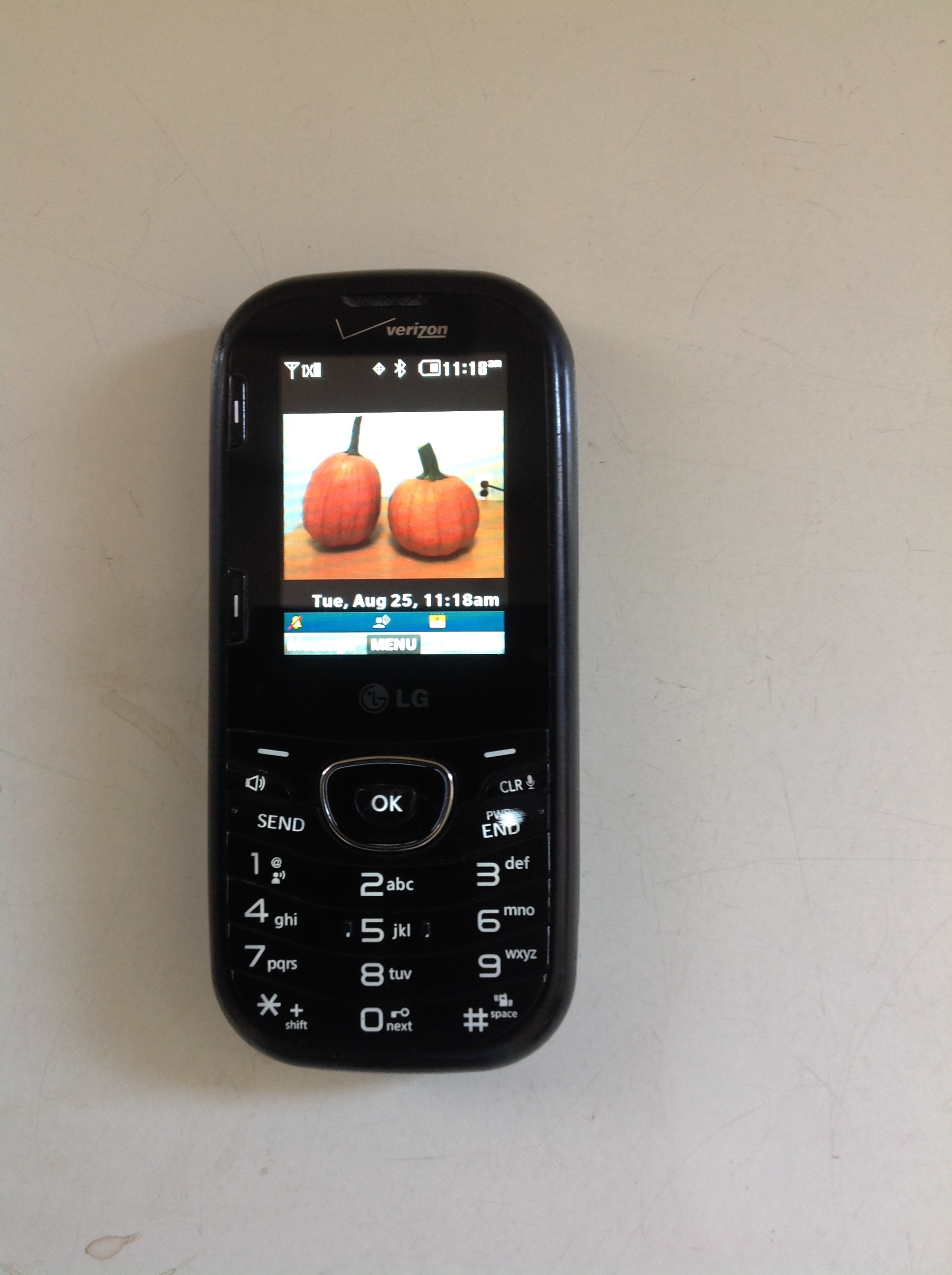
Pumpins on Phone

Photo info at bottom.

Fall of 2013

Several times now, my husband and I have grown pumpkins in the long flower bed which runs along the front of our house. The southwestern exposure makes it the perfect location! We did it again this summer. Don’t you envy our green thumbs? Don’t you think we are the coolest people ever? Not only did we defy tradition and plant them in the front yard, we strategically threaded the lush leaves and brilliant orange blossoms between the blue and pink perennials to create a work of art. Close your eyes and picture it!

Can you see it? Good! Now let me admit my deceit.

Each year we buy (or grow!) at least one pumpkin to put on the front stoop for Halloween. We usually forget to carve it. That isn’t a problem. It’s so cheerful sitting there that it doesn’t really matter. But then we just forget it’s there at all. Until a putrid stench brings to our attention the fact that it has liquefied into a skin-covered bag of slime pudding. The solution: Kick it into the flower bed…and forget about it.

One warm day several months ago, I noticed a darling little tendril creeping out of the flower bed and onto the sun-warmed sidewalk. At this moment, I understood Wilbur’s excitement at the hatching of Charlotte’s babies. I tenderly turned it and pointed it back into the flower bed. It continued to grow steadily.

At some point, my husband began making diplomatic comments about the difficulty of mowing around the vine. My (notice I have become possessive) little runner was picking up speed. It had sent its suckering tentacles out onto the lawn in a reconnaissance mission which was soon followed by a full-blown invasion. Not wanting to cause a fuss but unwilling to sacrifice the vine, I repositioned the growth so that it fit within the footprint of the flower bed.

My devotion was starting to resemble a gambling addiction. I checked for baby pumpkins daily. I rationalized the smothering death of our perennials with the thought that the next time I looked, I would surely find the start of a pumpkin.

My husband is a patient man; however, it was clear that my project was starting to kill off large swaths of lawn. I had been reshaping this explosion so that it followed the contours of the bed, but it had long since billowed out of bounds. Mature and understanding couples’ therapist that I am, I admitted my burgeoning affair. The vine had to go! Just as I was poised to start yanking, I discovered my Beloved had given birth to two darling offspring.

I compromised. I removed parts of the plant “downstream” from the pumpkins. Would this buy me enough time to harvest them? I knew I needed counseling when I started neglecting my hygiene in order to spend more time searching for new buds. I dispatched them in short order. I had to save the plant’s vital energies for my wards! My husband has had years to figure out he married a madwoman, so I guess my compromise was sufficient. He didn’t say anything further.

Soon we had a couple of vibrant orange pumpkins sitting on our kitchen table. Please understand “couple” in the literal sense. I sent my husband and daughters a wedding invitation with a photo of the happy pair posed side by side in front of a pale turquoise wall. What a lovely color combination. I swooned!

The groom was taller and thinner with a slim, curving stem. I called him Earl. A few weeks younger, the bride was short and round with a thicker, stubbier nub. I named her Maybonne. I conducted the ceremony and pronounced them man and wife.

When I went to rip out the vine a few days later, I found a surprise addition to the family. I christened him Junior and placed him by his parents. Day after day, I sat at the kitchen table enjoying their companionship.

At about the time the table started to feel a bit cramped, the weather began to show the first inklings of Fall. I decided to put Junior out to decorate the front stoop. He looks great out there! Unfortunately for him, history foretells a rotten end.

The chill in the air got me started thinking about chili, stews, and squash. Squash…

I surveyed Earl and Maybonne with glassy eyes as I recalled the delicious oven-roasted Kabocha we had eaten a few years back.

Earl ended up on the dinner table, wearing olive oil and herbs. He also volunteered for a mighty fine pie. Maybonne watched, traumatized, but otherwise intact. Until the arrival of the power company newsletter. Which just happened to feature a recipe for chicken pumpkin stew.

I wanted to remember the happy pair so I saved their engagement photo and made it my phone wallpaper. Here they are on our kitchen table in 2013.

On Becoming Invisible

Image credit here.

Image credit here.

Sometime in 2013…

When I realized what was happening to me, I wanted to use elegant-sounding adjectives such as diaphanous or gossamer to describe the process or the outcome. Becoming diaphanous sounds so much more lovely than the reality of feeling myself disappear in dribs and drabs until I look like a moth-eaten cheesecloth or the elbow of my favorite sweater. I might even come to resemble the seat of my daughter’s Speedo after too many seasons of sun and chlorine.

This process had been stealthily underway for a few years before I stood up and took notice. Here, I am primarily referring to the fading and thinning, which is gradual and not, therefore, immediately noticeable. This gentle decline is unlikely to induce trauma.

I don’t care so much about the loss of color—skin lightening, lips fading from pink to beige, hair showing tendrils of white—or the miracle migration of hair from scalp to chin. The loss of skin tone is manageable. And so much for the loss of childbearing potential. I have three wonderful, healthy daughters, and I feel complete.

The loss of muscle has been a little harder to manage. I have always thought of myself as an athlete, a vigorous person, despite the fact that my exercise routine now generally consists of early-morning strolls through suburbia. This is par for the course, I tell myself, as is my diminished visual acuity and what may be the start of hearing loss. Oh, and who cares about that half inch of height? My daughters are thrilled to be taller than I am. They absolutely gloat. So let me be happy for them! It is well and good that they should wax as I wane.

No, I had expected all these developments. It was the disappearance of some of my actual substance that stopped me in my tracks. I went to look in the mirror, and whole chunks were not reflected back.

You know by now that my relationship to Germany, CityX, in particular, holds all kinds of powerful meanings for me. The years I spent there were critical in shaping my identity and my way of viewing life. Present during my formation and beyond, through the constant of our friendship, was Hanna.

As I aged and became further and further removed from those early days, Hanna validated that I had, in fact, existed in that time and place and had lead the life I recalled. The power of this type of shared memory, a kind of witness bearing, is truly a living thing. I think of it almost as blood.

Into my 40’s, this humor kept me firm and supple. I have experienced this phenomenon with other friends as well. My friend Anne, for example, knows my whole life starting with the first day of ninth grade. While our talks always contain new thoughts and happenings, part of what makes the friendship life giving is our holding of each other’s memories. The holding of each other’s substance, I’d say. For only certain people can recall whole swaths of us in this sacred way, keeping us alive and real as the pressure of time bears harshly down upon us.

My oldest friend, Hanna, routinely held up the mirror to me and told me the story of myself. I did the same for her. “Look in the mirror, Jane, look! There you are!”

“Look, Jane!” Yes, young Jane, you are still in this world. Even now, you exist. You are walking to school in your blue Kickers and wearing your green windbreaker. I see your pigtails swinging as you lope into the schoolyard with your red leather Schulranzen (bookbag) on your back. You are planning to collect horse chestnuts on your way home. Oh, there you are, kicking Peter Bachmann in the shin (again!). And remember how happy you always feel in the botanical garden? You are forever wandering the pea-gravel paths and rowing in the lake….

It went on and on, often wordlessly. I saw my story recited in her eyes.

I was unprepared for the blow which severed our friendship. It came in the form of a letter and carried with it the agony of death. The bitterness of Hanna’s denunciation left no room for reconciliation. It was as though she had died at her own hand and left a note saying, “I just want you to know you did this to me.” Terrible, unbearable, waves of shock, grief, self doubt, anger. It is hard to put into words, and trying to do so can still overwhelm me.

In the aftermath of her rejection, I began to notice the deflation. Parts of me began to sag and hurt. More gray in the hair, more hair in the brush. Hanna had withdrawn her holding power and denied a part of my fabric. I am smaller now, diminished. The fading has accelerated, and whole pieces are missing when I look into the mirror.

To a point, the thinning and shrinking is an unavoidable part of growing older. I do wonder, however, if it isn’t easier when friends die naturally or when they gradually move out of one’s life. I imagine the parts of us they hold drift off gently with the ebbing of their presence. I wonder—is this less painful than when they reject us and yank out great clumps of us on their way out the door? When there is grabbing, there is a sort of violence from which one must work hard to recover. At least this is true for me.

The good I have believed about myself and the authenticity of my experience has been ejected from the mirror and thrown down to crack into sharp pieces. My assumptions about myself must be reevaluated, and this will be difficult. A distorted version of events has been cut with a quick jerk of the jigsaw and bolted to the mirror–to the very spot where my eye has always sought perspective. Where do I look for answers now?

I have a lot of work to determine what is true here. I search and try myself.

Oh, I am understanding the aging process better as a result. I understand why I must diminish and become smaller and paler. Fewer and fewer people will know who I was and even who I have become; and key parts of my being will slowly disappear from consciousness altogether. I expect that in time people might stop noticing me in stores, restaurants, professional circles. Perhaps I will become just one more little old lady. Unremarkable. Unremarked. Hardly worth the effort of conversation. Someone whose presence is allowed but not welcomed. Seeing this potential clearly, I know that fear and vulnerability could cause me to shrink myself down further still, until I have withdrawn into a living death.

While I do not intend to lift, tuck, dye, buff, paint or plump myself back into a spectre of youth, I don’t begrudge those who would. It is simply not my style. Rather than deny the truth of my decline, I believe I will choose to welcome it. Yes, I am deciding right this very moment. I can cry over my losses or rejoice at my divestment.

It becomes my choice, then, to send Hanna off with a gift. No one can rip from me what I would freely give. To my children, I give my once-firm breasts and belly. To Henry, I present the lips which seek his and the hands which have issued countless caresses. To Christopher and Jack, my coaches, I offer the legs and feet of my youth. It was worth the bunions and fractures to know you, to run so fast. Hanna, I give you those parts which you have attempted to snatch. I nullify your theft by my consent. I bless you, dear friend….

Please don’t interpret my words as passive or depressive.

Make no mistake, I do not intend to go softly.

I will stubbornly affix myself to these pages so that I can look back and find myself when I feel unsure. And I’ll keep writing myself into new memories and new meanings. Just you wait and see. I ache at the loss of my past. I am unwilling to lose my future.

So I’m killing off the cheesecloth metaphor and sparing myself. I am made for better. That which remains of me after each act of giving will fold upon itself, concentrating my indivisible essence into an ever purer form.

I’m going to become my finest and truest self, a single filament as sinuous as silk and as strong as steel. And when I have divested myself so fully and stretched so thinly as to disappear altogether, I’ll just keep on going.

I am thankful for an eternal perspective.

This is part of The Story of Hanna. For the prior segment, please click here. For the next segment, please click here.

And the Winner is….

Image credit here.

Image credit here.

September, 2012

I’m still trying to comprehend how “We’d love to have you visit but we have certain guidelines,” came to be viewed as “For years, I smiled and told you what you wanted to hear so that once you had emptied your bank account and arrived on our doorstep feeling warm and fuzzy; I could turn on you, my captive audience, and exorcise my pent up rage against you at my leisure.”

By Day 3, the trust between us had been grievously compromised. A few of us complained that stress was causing hair loss. No, this is not an attempt at humor.

Hanna and Niko said it wasn’t so much that I had refused Niko my laptop; it was that I hadn’t told him ahead of time, and now they were stuck without options. It wasn’t just that I hadn’t told him beforehand; it was that my failure to do so had caused Niko to lose face. It wasn’t only that I had caused Niko to lose face; it was that, in maintaining through the years that all was well between us, I had lied.

Three days down and 28 more to go.

No two ways about it. They had been tricked. They had spent thousands of dollars to pass their summer in jail. Jail being our basement apartment without a computer. They began to sequester themselves, eventually reversing their days and nights, in part–I believe–to avoid us. They surmised they had become persona non grata (personae non gratae??) and were the last fools on earth to learn it. This was not the case. At least not yet.

We experienced good moments. We shared some laughs. We had some conversations memorable for reasons other than distress. Even so, trouble was always lurking stage right.

Everything I did and said was now suspect. Things I had said and done in the past came under suspicion as well—as though past behaviors had taken on new meanings given this epiphany about my character.

I’ve seen this response in couples counseling many, many times.

Spouse A admits to an affair long past. Spouse B, who is learning of it for the first time, responds as if the infidelity had ended just yesterday. As the initial catharsis begins to settle, the reality of the affair sinks in. Spouse B will now spend months to years poring over reel after reel of old footage, looking for missed clues. Forgiveness and reconciliation may or may not follow.

It goes something like this:

“Three years ago, you canceled our dinner plans on Valentine’s Day because of a crisis at your work. I bet you weren’t working at all. You were probably fucking your mistress!”

Hanna and Niko were looking for confirmation of my infidelity, and they found it.

In times of extreme stress, I shut down. If you do not know me well, you might not even notice. I will continue to walk, talk, smile, listen, and laugh. I will perform my roles as mother, wife, and hostess. But I will do so with clinical remove. I become prodigious in my cooking and cleaning while the person behind my eyes goes dormant.

I did not intend to vacate during that 2011 visit. My psyche made the decision of its own accord. My soul balled itself up and locked itself away deep in my belly until such time as it felt safe to emerge and expose its tears, fears, and thrashing limbs.

My demeanor was evidence of malice, or, at minimum, indifference to their feelings. Hanna had seen me this way twice previously: immediately following a brutal semester of undergraduate studies and in the weeks following a trauma within my family. I believed she would understand my absence and hold a place in her heart for me until I was able to return.

I felt misunderstood, and I was in good company. My household found itself engaged in a protracted competition for the coveted title, Most Misunderstood and Maligned. Niko, Hanna, and I were the front runners but our daughters threw their hats in the ring as well. They were much quieter in their bid but I felt them jostling.

“Uncle Niko is being a baby, and you know it. He’s got the whole household revolving around him, and I can’t take it any more! You won’t speak up but if I do, I get in trouble because he’s The Guest. Gaaaaah!”

“Mom, why are you being so hard on Uncle Niko? I’ve been talking to Aunt Hanna, and I think the problem might be that you aren’t trying hard enough to understand him. Why are you looking at me that way? I didn’t do anything wrong.”

“Aunt Hanna and Uncle Niko aren’t fun any more. And you aren’t either. There’s nothing good to do around here. Are you even listening?”

Henry was the only one who didn’t enter the pageant.

In the end, Niko won. Hanna stuffed the ballot box.

Some days I wonder if I am seeing matters clearly or just positioning myself for a grab at Niko’s tiara.

This is part of The Story of Hanna. The episodes to date can be found under the tab of the same name. The previous installment is here.

Plan D

Photo credit here.

Photo credit here.

September, 2012

As Henry and I decided on some boundaries for our upcoming visit from Hanna and Niko, I made the decision to pilfer about 10 pounds of East Coast road maps and Guidebooks from our local AAA office. OK, OK. It actually involved my membership card and a lot of eye batting.

Niko enjoys researching but does not respond well to pressure, so I sent them to him in Germany months in advance. These would help him plan while Hanna was at work. They would also eliminate much of his need to use a computer during their extended stay. This was Plan A.

We blew through Plan A within a few hours of their arrival: Niko explained that he had felt too stressed to do any advance planning. He had not even looked at the materials. He needed my computer. Please.

Plan B was to ferry Niko to and from the public library each day. He would not consider it. He had had a humiliating experience while using a computer in an internet café, and the idea made him too anxious to contemplate. He needed my computer. Soon.

Plan C called upon the generosity of our youngest daughter, Claire. She had purchased a tiny netbook, and she offered it to Niko on loan. It was too slow and cranky to be of any real use. It was actually crap. He needed my computer. Now.

Do I sound like a good friend? Or do I sound like a patsy? Or maybe a martyr with whipped cream and a cherry on top? I was working hard to get Niko to a computer which was not mine, and part of my effort was motivated by cowardice. I dreaded turning Niko down, and all my planning was meant to minimize the fallout.

I could just have said, way back when, “We won’t have a computer for you to use, so please bring your laptop.” This never even occurred to me. This was probably due to reasons mentioned earlier.

I doubt this approach would have gone off as smoothly as one might hope. It would have tipped Niko off to the fact that the wind was shifting, and this would have precipitated the interrogation I was keen to avoid. But it would also have given him and Hanna time to set up proper accommodations–or conclude before plunking down thousands of dollars and boarding that plane that I was a sneaky, backbiting asshole who was encouraging their visit for the purpose of malice.

In any case, Niko declared he could not survive without a computer.

I declared I would not give him mine.

He was not satisfied with my no. Niko was determined that a compromised would be reached. And to be fair, why wouldn’t he? I had rarely, if ever, denied him any request reasonably within my power.

Niko pounded me with question after question about my work schedule, my home schedule, and my computer habits. He was certain he could get screen time without causing disruption to my routines. He worked tirelessly to open a loophole, and I worked tiredly to clamp them shut. I adhered robotically to my script: I need my computer for work. It is starting to fail. I can not afford to replace it.

My continued deflection, in the absence of reasons he deemed adequate, caused Niko to deduce that there must be More To The Story. The house vibrated with tension as our cat-and-mouse game escalated.

After a few days of relentless inquiry, I concluded that sticking to the script made me sound defensive and unfriendly. Niko’s illness lends itself to paranoia, and I did not want to feed it. We had always had an open give and take. I wondered if withholding the other reasons behind my refusal was tantamount to patronizing him, and that was never my intention. I concluded that our friendship deserved better. I didn’t want to come clean but…

I sought a private meeting.

Niko declined my request and then my appeals. He insisted I speak freely and that we have no secrets among us. I hoped that the intimacy and strength of our relationship over many years would suffice to remediate any damage my confession might cause.

This was not the case.

My concerns, however gentle, and my speculation, however tentative, were incredibly wounding. I spoke in German so that our children could not understand. However, they saw our faces and absorbed our emotion. Henry already knew what I was going to say, of course, and didn’t need to understand. I allowed that Niko’s behavior had taken place during prodromal and illness phases. I assured him that I was, in no way, making a statement about his goodness, character, or intentions. Niko accepted my words graciously at first. I suppose he experienced a kind of shock at these revelations. It didn’t last long.

I had not been able to protect his dignity, and we were no closer to solving the problem.

In our family, each child receives a laptop on her sixteenth birthday in anticipation of college. These are prized possessions. Two of our girls had already received theirs. As Niko’s disenchantment grew, he began to set his sights on their computers. He was a fox watching a hen house. Why hadn’t I anticipated this? I wasn’t sure what to do.

Did hospitality require that I “command” our daughters to hand over their nice computers when I would not loan my crummy one? Should I “allow” them to make the decision for themselves?

I had some idea of the conflict the girls must be feeling. They adored and wanted to please Uncle Niko but they had not forgotten the monopoly of 2006. They were older now, no longer wide-eyed and naive. They were starting to become disillusioned, and his behavior was starting to grate. Any generosity was more likely to be the result of capitulation than an act of heartfelt sharing.

I was buckling, and the visit had just begun. I was in danger of losing my cool with Niko but I was afraid of being unfair. I toggled back and forth. Was his behavior a manifestation of his illness? If so, I would manage compassion and fight for patience. I wasn’t eager to apply the labels “childish,” “demanding,” or worse.

I had forsworn my dysfunctional training in hospitality, and I had not yet developed another set of skills. I have replayed this scenario in my mind countless times since then, and I still find myself wondering how I should have responded. Nothing I came up with seemed right.

Since I couldn’t figure out what to do, I resorted to Plan D. D as in Deserter. Desperate. Defeated. Dumbshit.

Plan D was my escape plan. It called for me to abdicate my corner of the drama triangle. While this may have been an example of healthy boundary setting under other circumstances, the real-life result was not one I wish to repeat: I served up my children and beat a hasty retreat.

When Niko asked me if he could use the girls’ computers, I told him, “Ask them.” When my daughters asked me if they had to let him, I told them, “Do as you see fit.”

Under duress, Lindy, our oldest, refused; and she fell from grace.

Under duress, Bec, our middle child, complied. She was elevated to Confidante.

What strikes me, as I contemplate the aftermath of our weeks together, is that nobody ever even hinted that Henry give up his laptop, which was also used for work. Nobody blamed him for the way things unraveled. He was beyond reproach.

I see that the splitting had begun early on. Henry, Bec, and Claire were emerging as “good.” Lindy and I were rapidly becoming “bad.”

Hanna had begun to go M.I.A. More on that later…And Niko had begun to evaluate each of us in either-or terms: sympathetic or unfeeling, understanding or unfair, for him or against him. Hanna’s behavior, and later her words, made it clear that she and Niko were a package deal. Any “unkindness” towards Niko counted as an act against them both.

This is the twelfth installment of The Story of Hanna. The story, in sequence, can be found under the tab of the same name. Installment eleven can be found here.